.jpg)
Radiofrequency Ablation Pain Management Workshop at RIMS Ranchi: Asian Pain Academy Advances Interventional Pain Medicine


Introduction
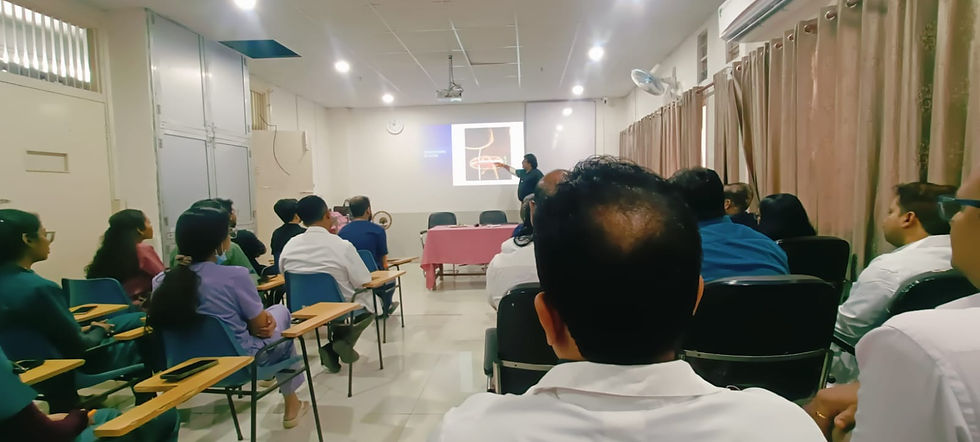
Radiofrequency Ablation Pain Management continues to transform the field of interventional pain medicine by offering precise, minimally invasive solutions for chronic pain conditions. In a landmark educational event, the Asian Pain Academy successfully completed an advanced Pain Medicine Workshop at Rajendra Institute of Medical Sciences (RIMS), Ranchi, Jharkhand, on 18th April 2024, showcasing the latest developments in Radiofrequency Ablation Pain Management techniques.
This prestigious workshop brought together pain physicians, anesthesiologists, and interventional specialists to explore modern radiofrequency technologies and live procedural demonstrations. The event was organized by Dr. Dipali Singh, Department of Anaesthesiology, RIMS, and featured expert faculty from Asian Pain Academy, Dr. Debjyoti Dutta and Dr. Chinmoy Roy, who conducted highly specialized live interventional procedures.
This workshop served as a major academic platform to advance practical understanding of Radiofrequency Ablation Pain Management, especially in the treatment of trigeminal neuralgia, lumbar facet pain, and chronic knee pain.
Why Radiofrequency Ablation Pain Management Is Transforming Modern Pain Medicine
Chronic pain affects millions worldwide, often reducing quality of life and limiting function. Traditional treatment methods such as medications or surgery may not always provide optimal outcomes.
This is where Radiofrequency Ablation Pain Management has emerged as a revolutionary solution.
Radiofrequency Ablation (RFA) works by delivering controlled thermal energy to targeted nerves responsible for transmitting pain signals. Depending on pathology and anatomical targets, several forms of RFA may be used:
Conventional Radiofrequency Ablation
Pulsed Radiofrequency
Cooled Radiofrequency Ablation
Bipolar and Advanced Trident Cannula Techniques
These technologies allow physicians to treat pain with precision while minimizing tissue trauma.
At the RIMS workshop, participants gained in-depth exposure to the latest innovations shaping the future of Radiofrequency Ablation Pain Management.

Advanced Academic Session on Radiofrequency Ablation Pain Management
The workshop began with a detailed academic lecture on the Basics of Radiofrequency Ablation Pain Management, laying the foundation for participants to understand:
Mechanism of lesion formation
Neural targeting principles
Patient selection criteria
Safety parameters
Indications and contraindications
Imaging guidance techniques
Modern Radiofrequency Technologies Discussed
A major highlight was the detailed discussion on different modes of modern radiofrequency systems, including:
Conventional Radiofrequency Ablation
Conventional RFA remains a gold-standard intervention for many chronic pain syndromes. It creates controlled thermal lesions around pain-generating nerves for long-term relief.
Applications discussed included:
Lumbar facet pain
Trigeminal neuralgia
Sacroiliac pain
Genicular nerve pain
Cooled Radiofrequency Ablation
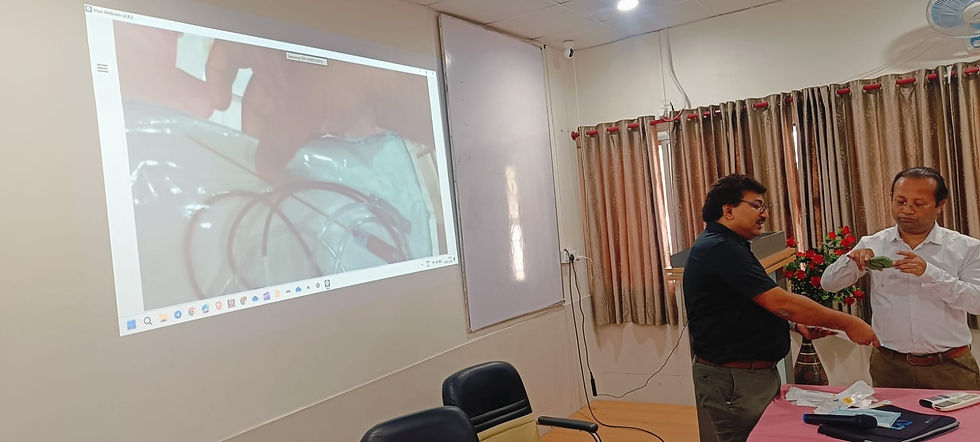
A key focus of the workshop was Cooled Radiofrequency Ablation, one of the fastest growing areas in Radiofrequency Ablation Pain Management.
Faculty discussed how cooled RF allows:
Larger lesion sizes
Better nerve capture
Improved procedural efficacy
Greater utility in anatomically variable targets such as genicular nerves
Its role in chronic knee osteoarthritis pain generated significant academic interest among participants.
Trident Cannula Technology
Another advanced innovation demonstrated was the Trident Cannula, a modern tool designed to optimize lesion geometry and improve outcomes in interventional pain procedures.
Its application in complex pain interventions was discussed extensively.
Live Demonstration of Modern Radiofrequency Machines
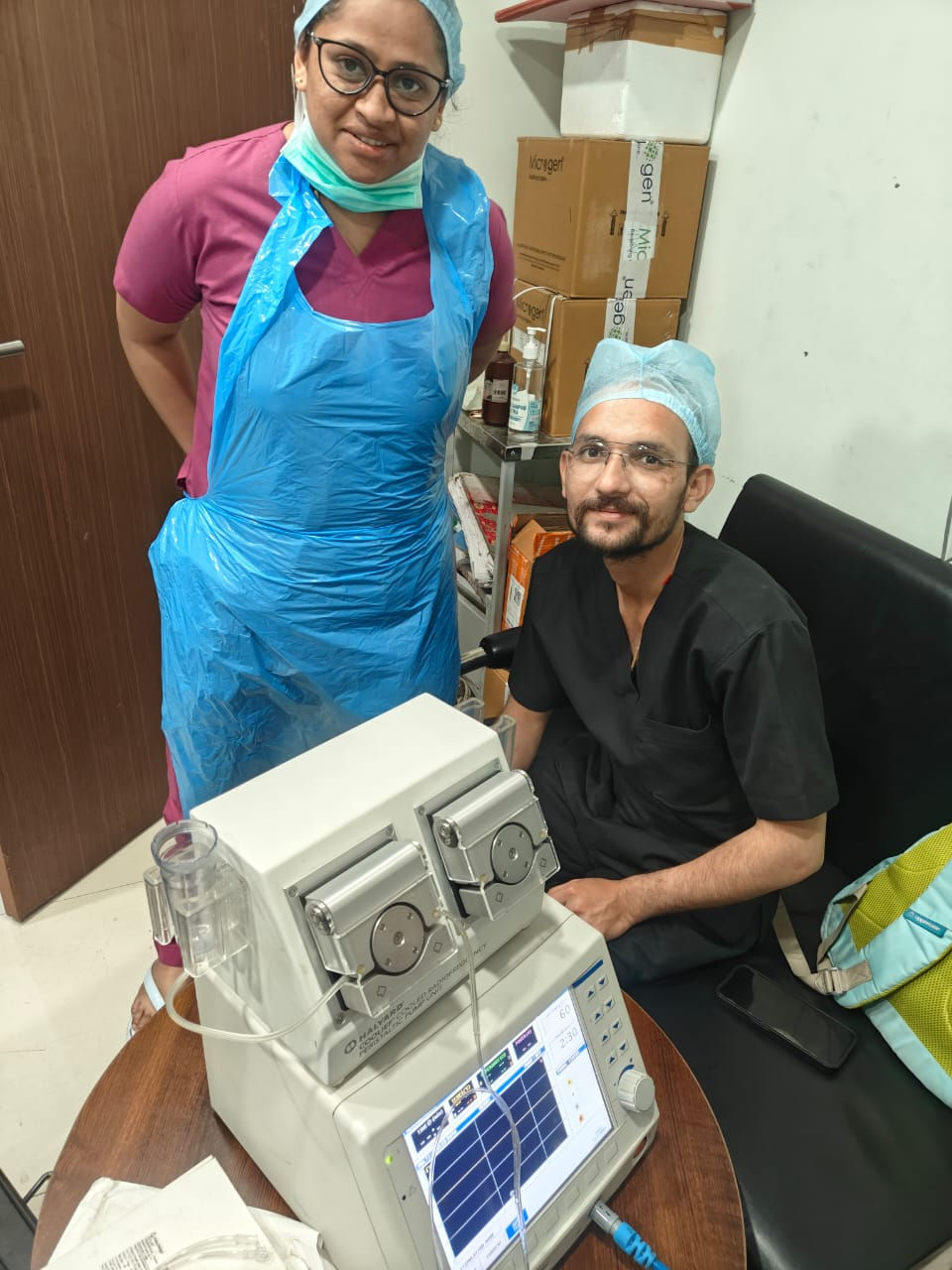
The workshop moved beyond theory into hands-on demonstration, where participants were introduced to:
Conventional RF Systems
Cooled RF Machines
Trident Cannula Systems
This practical component made the workshop especially valuable, allowing attendees to understand both technology and technique behind Radiofrequency Ablation Pain Management.
Live Interventional Cases Performed During the Workshop
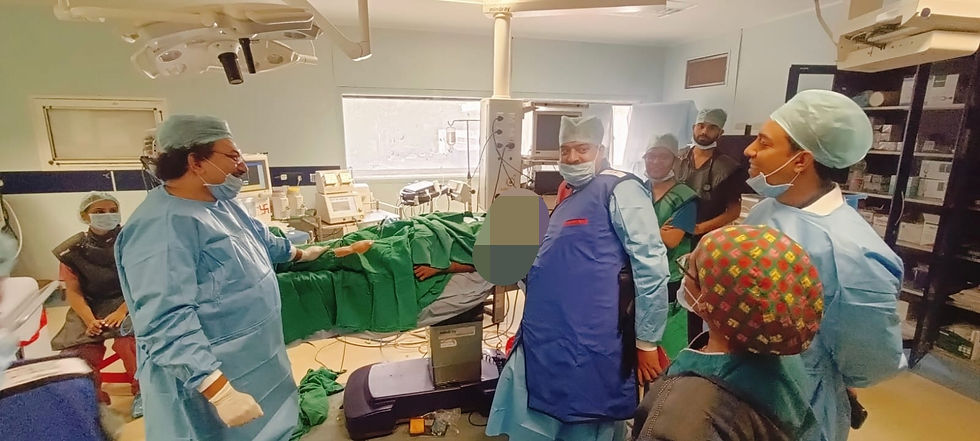
One of the most significant strengths of the workshop was the series of live fluoroscopy and ultrasound-guided interventions performed by the Asian Pain Academy faculty.

Gasserian Ganglion Conventional RF Neurotomy for Trigeminal Neuralgia
The first two live cases featured Gasserian Ganglion Conventional Radiofrequency Neurotomy, performed for severe facial pain.
This highly specialized procedure is a critical component of advanced Radiofrequency Ablation Pain Management for trigeminal neuralgia.
Procedure Highlights
Using fluoroscopic guidance, the faculty demonstrated:
Precise foramen ovale access
Sensory and motor stimulation testing
Controlled lesioning protocol
Safety precautions to avoid complications
Patient monitoring during RF lesion creation
Participants had the opportunity to observe how conventional RF can provide significant relief for patients suffering from debilitating facial pain.
This segment generated intense academic discussion due to the complexity and precision required.
Conventional Radiofrequency Ablation for Lumbar Facet Pain
The workshop then proceeded to another important pain condition—Lumbar Facet Joint Pain.
Lumbar facet-mediated pain remains a common cause of chronic low back pain, and Radiofrequency Ablation Pain Management offers an effective minimally invasive solution.
Procedural Demonstration Included
Faculty demonstrated:
Medial branch nerve targeting
Fluoroscopy-guided needle placement
Sensory and motor testing
Conventional lesion creation
Strategies for improving outcomes
Participants appreciated the stepwise procedural approach and technical pearls shared during the live demonstration.
Knee Genicular Nerve Cooled Radiofrequency Ablation
The final and highly anticipated live intervention was Knee Genicular Nerve Cooled Radiofrequency Ablation.
This advanced technique represents one of the most exciting developments in Radiofrequency Ablation Pain Management, particularly for chronic knee osteoarthritis pain.
Dual Guidance Approach Demonstrated
What made this case particularly unique was the use of:
Fluoroscopy-guided targeting
Ultrasound-guided visualization
Combined imaging approach for precision and safety
Faculty demonstrated targeting of key genicular nerves followed by cooled RFA lesioning.
Why Cooled RFA for Knee Pain Matters
Compared with traditional approaches, cooled RFA may provide:
Larger lesions
Improved target coverage
Durable pain relief
Functional improvement
Reduced need for surgery in selected patients
This live demonstration was one of the workshop’s most appreciated sessions.
Educational Impact of the RIMS Pain Medicine Workshop
The workshop successfully bridged the gap between theory and hands-on intervention.
Participants gained exposure to:
Advanced pain procedures
Latest RF technologies
Live interventional case execution
Practical troubleshooting techniques
Evidence-based application of Radiofrequency Ablation Pain Management
For many attendees, this was a rare opportunity to observe multiple advanced RFA procedures in a single workshop.
Strengthening Interventional Pain Education in India
Academic initiatives like this highlight the growing role of the Asian Pain Academy in promoting structured education in interventional pain medicine.
By bringing advanced techniques such as:
Gasserian Ganglion RF Neurotomy
Lumbar Facet RFA
Cooled Genicular Nerve Ablation
to academic centers like RIMS, the workshop contributed significantly to strengthening pain medicine training in India.
Role of Asian Pain Academy in Advancing Radiofrequency Ablation Pain Management
The Asian Pain Academy has consistently worked toward advancing evidence-based education in interventional pain medicine.
This workshop further reinforced its commitment to:
Physician training
Skill development
Advanced procedural education
Innovation in pain practice
Improving patient outcomes through modern interventions
Through live procedural teaching and academic exchange, the academy continues to promote excellence in Radiofrequency Ablation Pain Management.
Workshop Leadership and Faculty
This successful academic event was made possible through the collaborative efforts of:
Organized By:Dr. Dipali SinghDepartment of AnaesthesiologyRajendra Institute of Medical Sciences (RIMS), Ranchi
Asian Pain Academy Faculty:Dr. Debjyoti DuttaDr. Chinmoy Roy
Their expertise and commitment made this workshop a meaningful educational milestone.
Future of Radiofrequency Ablation Pain Management
The future of Radiofrequency Ablation Pain Management lies in precision technologies, image-guided interventions, and continual physician education.
Innovations such as:
Cooled RF
Trident Cannula Systems
Expanded Neuromodulation Approaches
Hybrid Fluoroscopy-Ultrasound Techniques
are shaping the next generation of pain interventions.
Workshops like this play a crucial role in ensuring these innovations reach practicing clinicians.
Conclusion
The successful completion of the Pain Medicine Workshop at RIMS Ranchi marked another important step forward in advancing Radiofrequency Ablation Pain Management education in India.
From foundational lectures to advanced live demonstrations involving:
Gasserian Ganglion Conventional RF Neurotomy
Lumbar Facet Radiofrequency Ablation
Knee Genicular Nerve Cooled RFA
the workshop delivered a comprehensive learning experience for participants.
Asian Pain Academy remains committed to driving excellence in interventional pain medicine through education, innovation, and collaborative academic initiatives.
As Radiofrequency Ablation Pain Management continues to redefine chronic pain treatment, such workshops help ensure physicians stay at the forefront of modern pain practice.


Comments